Comprehensive guide to understanding and calming crying babies. Learn evidence-based soothing techniques, identify cry types, and manage infant fussiness with confidence. Expert parenting advice for newborns through infancy.
📚 Article Contents
Understanding Baby Crying: The Universal Language of Infancy
Crying is your baby's primary means of communication during the first months of life. It's their way of saying "I need something" when they lack the words to express hunger, discomfort, fatigue, or the need for connection. While hearing your baby cry can be stressful and emotionally challenging for parents, understanding that crying is normal and necessary can help you approach these moments with greater confidence and compassion.
Research shows that newborns typically cry for 2-3 hours per day, with crying peaking around 6-8 weeks of age. This pattern is developmentally normal and doesn't reflect on your parenting abilities. In fact, responsive parenting—where you consistently answer your baby's cries—builds secure attachment and teaches your infant that their needs matter and will be met.
This comprehensive guide goes beyond simple techniques to provide a deep understanding of why babies cry and how to respond effectively. We'll explore evidence-based calming methods, developmental considerations, and practical strategies that respect both your baby's needs and your wellbeing as a parent. Remember: there's no such thing as spoiling a newborn—responding to cries builds trust and security that forms the foundation for healthy emotional development.
The Five Universal Calming Techniques: Science-Backed Solutions
These five methods represent the most effective, research-supported approaches to calming crying babies. Developed from cross-cultural studies and pediatric research, they address babies' fundamental neurological and physiological needs.
1. The Soothing Swaddle: Recreating Womb Security
The Science: Swaddling activates the calming reflex by providing deep pressure stimulation and containing the startle reflex. This mimics the secure containment babies experienced in the womb.
Proper Technique: Use a large, breathable muslin blanket. Wrap snugly around the arms and chest while leaving room for hip movement. The swaddle should feel like a firm hug, not a constraint.
When It Works Best: Particularly effective for newborns (0-3 months) and during sleep transitions. Also helpful for babies with strong startle reflexes or those who seem unsettled by their own limb movements.
Safety Notes: Always place swaddled babies on their backs to sleep. Discontinue swaddling when babies show signs of rolling over (typically 3-4 months). Ensure the swaddle isn't too tight around hips to allow for healthy development.
2. Side or Stomach Positioning: Activating the Calming Reflex
The Science: Holding babies on their side or stomach activates the vestibular system and can trigger what Dr. Harvey Karp calls the "calming reflex." This position mimics how babies were positioned in the womb.
Proper Technique: Hold your baby securely in your arms either on their left side (which can aid digestion) or stomach. Always maintain full support of head and neck. Use this for calming only—never for unsupervised sleep.
When It Works Best: Excellent for intense crying spells and when babies seem inconsolable. Particularly effective when combined with gentle motion.
Safety Notes: This is a holding position only. Always return baby to their back for sleep. Monitor breathing and ensure the airway remains clear when using stomach positioning.
3. Soothing Sounds: Recreating Womb Acoustics
The Science: The womb is surprisingly loud—about the volume of a vacuum cleaner. White noise and shushing sounds mimic this environment and can trigger calming responses.
Proper Technique: Use a white noise machine, app, or create "shushing" sounds close to your baby's ear (but not directly into it). The sound should be as loud as your baby's crying to be effective.
When It Works Best: During sleep routines, in overstimulating environments, or when babies seem startled by sudden noises. Also helpful for masking household sounds that might disturb sleep.
Sound Options: White noise machines, humidifiers, fans, vacuum cleaners, hair dryers (at a distance), or dedicated shushing. Nature sounds and heartbeat recordings can also be effective.
4. Gentle Motion: The Power of Movement
The Science: Motion stimulates the vestibular system, which helps regulate the nervous system. Gentle, rhythmic movement mimics the constant motion babies experienced in the womb.
Proper Technique: Small, jiggly movements (supporting head and neck always), rocking in a rocking chair, gentle bouncing on an exercise ball, or walking while holding baby close. The motion should be rhythmic and continuous.
When It Works Best: For fussy periods, when babies fight sleep, or during "witching hour" (typically early evening). Also effective when combined with other techniques like swaddling and shushing.
Motion Options: Babywearing, rocking chairs, baby swings (with proper safety precautions), car rides, or gentle dancing. The key is finding the rhythm and intensity your baby prefers.
5. Sucking: The Ultimate Soother
The Science: Supping triggers the release of calming chemicals in the brain and organizes the nervous system. It's one of the most powerful innate calming mechanisms babies possess.
Proper Technique: Offer breastfeeding (even if not hungry), a pacifier, or a clean finger. Ensure proper latch if breastfeeding and use age-appropriate pacifiers.
When It Works Best: For general fussiness, during sleep transitions, after feedings, or when babies need extra comfort. Particularly helpful during growth spurts or developmental leaps.
Sucking Options: Breastfeeding for nutrition and comfort, pacifiers for non-nutritive sucking, or allowing baby to find their hands/thumb as they develop motor skills.
Advanced Calming Strategies: Beyond the Basics
When the five basic techniques need reinforcement, these advanced strategies can help manage particularly challenging crying episodes.
The "Colic Carry": Hold your baby face down along your forearm, with their head supported in your hand and their legs straddling your elbow. The gentle pressure on their abdomen can comfort babies with gas or digestive discomfort.
Warm Bath Technique: A warm bath (not hot) can reset a crying spell. The warm water mimics womb temperature and the sensation can be deeply calming. Follow with gentle massage using baby-safe lotion.
Change of Scenery: Sometimes simply moving to a different room, going outside, or changing the lighting can break the crying cycle. New stimuli can distract and calm an overwhelmed baby.
Babywearing for Connection: Using a structured baby carrier keeps your baby close to your heartbeat and body rhythm while freeing your hands. The combination of closeness, motion, and your scent is powerfully calming.
The 5 S's Combination: Combining Swaddling, Side/Stomach position, Shushing, Swinging, and Sucking simultaneously can address multiple calming pathways at once for particularly intense crying.
Temperature Regulation: Sometimes babies cry because they're too hot or cold. Check the back of their neck—it should feel warm, not sweaty or cool. Adjust layers accordingly.
Dimming Lights: Overstimulation from bright lights can cause crying. Moving to a dimly lit room reduces sensory input and can help babies calm more quickly.
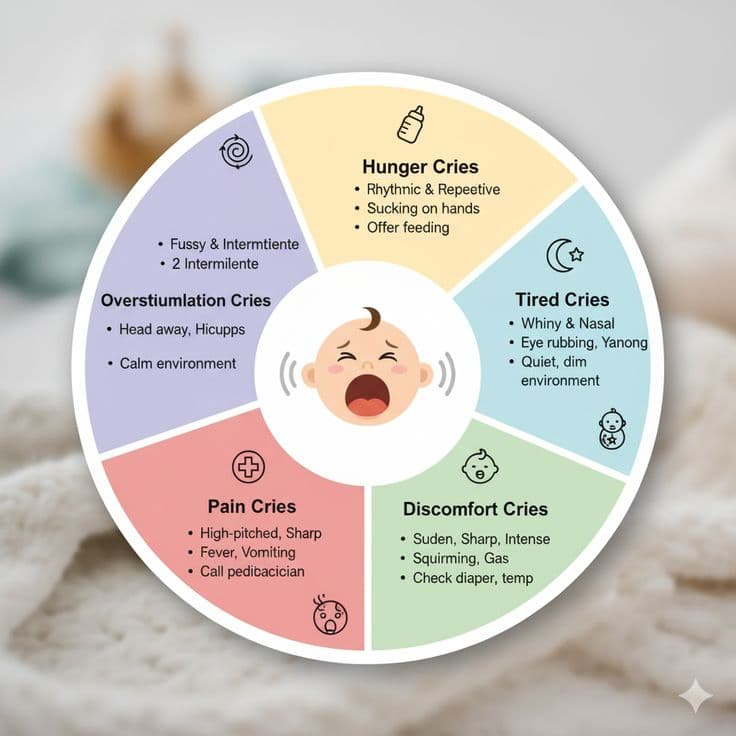
Identifying Different Cry Types: Learning Your Baby's Language
While all cries may sound similar at first, most parents can learn to distinguish between different types of cries with practice and attention.
Hunger Cries
Sound Pattern: Rhythmic, repetitive, and often starts as a fussy complaint that escalates
Associated Cues: Rooting reflex, sucking on hands, turning toward the breast or bottle
Timing: Typically 2-3 hours after last feeding for newborns, or during growth spurts
Response: Offer feeding promptly. Hunger cries often resolve quickly once feeding begins.
Tired Cues and Cries
Sound Pattern: Whiny, nasal quality, often builds gradually from fussing to full crying
Special Considerations: Babies become more social and interested in their environment. Crying may indicate boredom or frustration with limitations.
Older Infants (6-12 months)
Primary Needs: Mobility, exploration, communication development
Best Techniques: Distraction, offering choices, supporting mobility, verbal reassurance
Parent Focus: Supporting independence while maintaining connection, teaching self-soothing skills
Special Considerations: Separation anxiety peaks around 8-10 months. Crying may reflect frustration with physical limitations or fear of separation.
When Crying Becomes Concerning: Red Flags for Parents
While most crying is normal, certain patterns or accompanying symptoms warrant medical attention.
High-Pitched Cry: A sharp, high-pitched cry that sounds different from your baby's normal crying could indicate neurological issues or significant pain.
Inconsolable Crying: Crying that continues for more than 2-3 hours despite all calming attempts, especially if accompanied by fever or other symptoms.
Weak or Whimpering Cry: A weak, lethargic cry combined with decreased movement or responsiveness requires immediate medical attention.
Crying with Specific Physical Symptoms: Fever (100.4°F or higher in infants under 3 months), vomiting, diarrhea, rash, breathing difficulties, or bulging fontanelle.
Changes in Feeding Patterns: Refusal to feed or significant decrease in wet diapers (fewer than 6 per day for infants).
Duration Concerns: While "colic" is defined as crying for more than 3 hours per day, 3 days per week, for 3 weeks, any significant change in crying patterns deserves discussion with your pediatrician.
Parent Intuition: Always trust your instincts. If you feel something is seriously wrong, seek medical attention regardless of whether specific "red flags" are present.
Caring for Yourself While Caring for Your Crying Baby
A crying baby can trigger intense stress responses in parents. Managing your own wellbeing is essential for effective caregiving.
Recognize Your Limits: It's normal to feel frustrated, overwhelmed, or even angry when your baby cries incessantly. These feelings don't make you a bad parent.
Safe Placement: If you feel your frustration rising, place your baby safely in their crib and take a 5-10 minute break. Crying in a safe space is better than risk of shaken baby syndrome.
Develop Coping Strategies: Deep breathing, counting to ten, calling a friend or partner for support, or repeating a calming mantra can help manage stress.
Share the Load: Take turns with your partner during particularly difficult crying spells. Even 30-minute shifts can make challenging periods more manageable.
Seek Support: Join parent groups, talk to friends with children, or consult with your pediatrician. Knowing others have similar experiences reduces isolation.
Manage Expectations: Understand that some crying is developmentally normal and doesn't reflect on your parenting abilities. You cannot "fix" all crying.
Professional Help: If you're experiencing persistent feelings of depression, anxiety, or inability to cope, speak with your healthcare provider. Postpartum mood disorders are treatable.
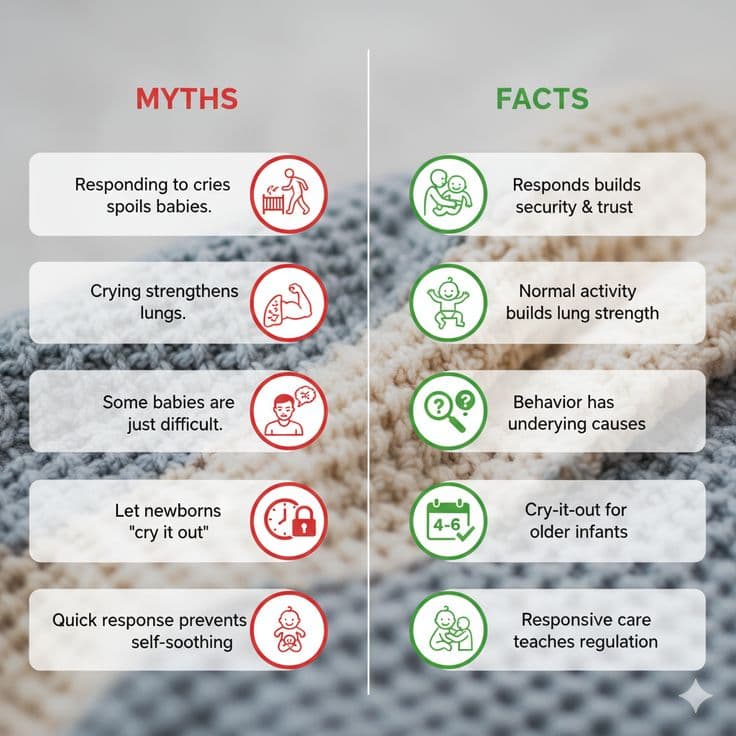
Myths and Facts About Baby Crying
Separating fact from fiction helps parents respond more effectively to their baby's needs.
Myth: "You'll spoil your baby if you pick them up every time they cry."
Fact: Newborns and young infants cannot be spoiled. Responding to cries builds security and trust.
Myth: "Crying helps develop lung strength."
Fact: There's no evidence crying benefits physical development. Babies get plenty of lung exercise during normal activities.
Myth: "Some babies are just naturally difficult."
Fact: While temperament varies, most "difficult" behavior has underlying causes that can be addressed with patience and observation.
Myth: "You should let babies 'cry it out' from birth."
Fact: Cry-it-out methods are not appropriate for newborns. Most sleep training approaches are designed for older infants (typically 4-6 months+).
Myth: "If you respond too quickly, your baby will never learn to self-soothe."
Fact: The foundation for self-soothing is built through consistent, responsive caregiving in infancy. Babies learn regulation by being regulated.
Visual Inspiration: Myths and Facts About Baby Crying
Myths and Facts About Baby Crying
Creating a Calming Environment: Proactive Strategies
Beyond reactive techniques, creating an environment that minimizes crying and supports calm can make a significant difference in your daily parenting experience.
Establish Predictable Routines: Consistent feeding, sleeping, and waking patterns help babies feel secure and reduce anxiety-driven crying.
Watch for Early Cues: Respond to early hunger signs, tired signals, or discomfort before crying escalates. Early intervention is often more effective.
Create Calm Transitions: Move gradually between activities. Give warnings before ending enjoyable activities and use consistent transition rituals.
Manage Sensory Input: Be mindful of overstimulation from lights, noises, and handling. Create calm spaces in your home for downtime.
Parental Regulation: Babies mirror parental emotional states. Your calm presence is one of the most powerful calming tools available.
Environmental Consistency: Maintain consistent temperature, lighting, and noise levels during sleep times to support restful sleep.
Anticipate Developmental Changes: Understand that crying patterns change with developmental leaps, teething, and new skills. Adaptation is key.
💡 Helpful Tips
1Keep a crying diary to identify patterns and triggers—note timing, duration, intensity, and what helped.
2Try the '5 S's' systematically: Swaddle, Side/Stomach position, Shush, Swing, Suck—in combination for maximum effect.
3Remember that some crying is normal and doesn't require 'fixing'—sometimes babies just need to release energy.
4Trust your instincts—you know your baby better than any book or expert.
5When one method stops working, don't be afraid to try something completely different.
6Babies often have a 'witching hour' in early evening—plan for this with extra support and patience.
7Check your own tension—babies sense stress. Take a breath and relax your shoulders before picking up your crying baby.
8Some babies cry more during growth spurts or developmental leaps—this is temporary.
9If breastfeeding, consider your diet—some babies react to certain foods in breastmilk.
10Remember that this phase is temporary. The intense crying of early infancy does pass.
11Don't compare your baby to others—crying patterns vary widely among healthy infants.
12When you find what works, add it to your 'calming toolkit' for future use.
13Sometimes the best response is simply presence—holding your baby through their distress without trying to stop it.
14Take videos of your baby when they're calm and happy to watch during challenging moments.
15Remember that responding to cries builds lifelong emotional security and trust.